

By 1892, creative struggles persisted. A symphony in E-flat was abandoned—its fragments later reworked into the Third Piano Concerto and the Andante and Finale. Soon after, he began a new symphony in B minor. If Souvenir de Florence carries melancholy close to the surface, it’s nothing compared to the emotional depths of the Sixth Symphony. “I am very proud of the symphony,” he wrote. “I think it’s the best of my compositions.”
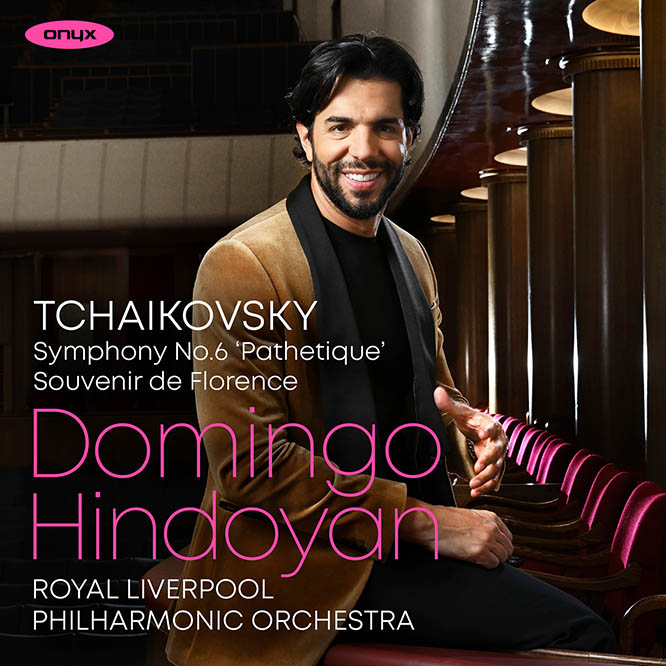
Domingo Hindoyan and the Royal Liverpool Philharmonic Orchestra bring out these nuances with striking clarity—the volatility, the vulnerability, and the fleeting moments of light. In their hands, Tchaikovsky’s internal struggle becomes almost tactile, the music swelling with all the weight of a farewell. Nine days after conducting its premiere, Tchaikovsky was dead—one of the many victims of the cholera pandemic sweeping the Russian Empire.
1. Souvenir de Florence, Op. 70: I. Allegro con spirito (11:37)
2. Souvenir de Florence, Op. 70: II. Adagio cantabile e con moto (11:13)
3. Souvenir de Florence, Op. 70: III. Allegro moderato (6:35)
4. Souvenir de Florence, Op. 70: IV. Allegro vivace (7:10)
5. Symphony No. 6 in B Minor, Op. 74, ‘Pathetique’: I. Adagio – Allegro ma non troppo (18:53)
6. Symphony No. 6 in B Minor, Op. 74, ‘Pathetique’: II. Allegro con grazia (7:22)
7. Symphony No. 6 in B Minor, Op. 74, ‘Pathetique’: III. Allegro molto vivace (8:35)
8. Symphony No. 6 in B Minor, Op. 74, ‘Pathetique’: IV. Adagio lamentoso (10:28)
13222990066/104.28.159.215