
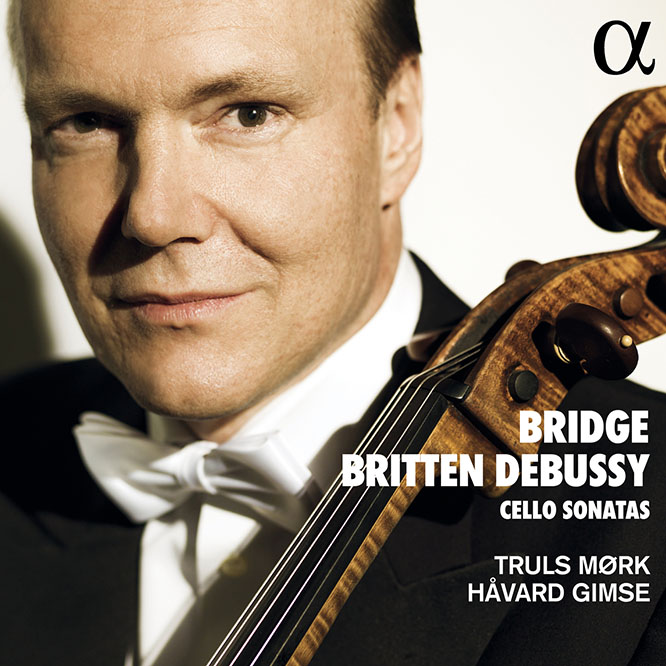

The qualities of the new recording are especially favourable to Frank Bridge’s big two-movement Sonata – composed athwart the outbreak of the First World War, which horrified him – where the old recording suffered from slightly cloudy piano sound. As Mørk soars through the fraught lyricism of its first half, one hears clearly how Bridge subtly inflected even the most seemingly conventional piano figuration with his own individuality. And if the new recording of Debussy’s war-time Sonata is less dark and rhapsodic than the Rostropovich-Britten, it exemplifies the more enduring characteristics of French culture he sought to uphold.
The fugitive flights of melody and figuration comprising the three whimsical movements of Janáček’s Pohádka (Fairy Tales) demand a glancing, mercurial response which they certainly receive here, while the Britten Sonata somehow emerges as a weightier, more substantial work than in the original recording by its dedicatee and composer – special though that will always remain.
01 Bridge_ Cello Sonata, H.125_ I. Allegro ben moderato
02 Bridge_ Cello Sonata, H.125_ II. Adagio ma non troppo – Molto allegro agitato
03 Debussy_ Cello Sonata, CD 144_ I. Prologue (Lent, sostenuto e molto risoluto)
04 Debussy_ Cello Sonata, CD 144_ II. Sérénade (Modérément animé)
05 Debussy_ Cello Sonata, CD 144_ III. Final (Animé, léger et nerveux)
06 Janá?ek_ Pohádka_ I. Con moto
07 Janá?ek_ Pohádka_ II. Con moto
08 Janá?ek_ Pohádka_ III. Allegro
09 Britten_ Cello Sonata, Op. 65_ I. Dialogo (Allegro)
10 Britten_ Cello Sonata, Op. 65_ II. Scherzo-Pizzicato (Allegretto)
11 Britten_ Cello Sonata, Op. 65_ III. Elegia (Lento)
12 Britten_ Cello Sonata, Op. 65_ IV. Marcia (Energico)
13 Britten_ Cello Sonata, Op. 65_ V. Moto perpetuo (Presto)
Booklet – Bridge, Britten, Debussy_ Cello Sonatas.pdf
13222990066/104.28.159.215